
The Source of Today's Garden Water Fountains
The Source of Today's Garden Water Fountains Pope Nicholas V, himself a learned man, governed the Roman Catholic Church from 1397 to 1455 during which time he commissioned many translations of old classic Greek texts into Latin. Embellishing Rome and making it the worthy capital of the Christian world was at the center of his ambitions. In 1453 the Pope commissioned the reconstruction of the Aqua Vergine, an historic Roman aqueduct which had carried clean drinking water into the city from eight miles away. The ancient Roman tradition of marking the entry point of an aqueduct with an imposing celebratory fountain, also known as a mostra, was restored by Nicholas V. At the behest of the Pope, architect Leon Battista Alberti began the construction of a wall fountain in the spot where we now find the Trevi Fountain. The water which eventually provided the Trevi Fountain as well as the famed baroque fountains in the Piazza del Popolo and Piazza Navona flowed from the modified aqueduct which he had renovated.
The Countless Designs of Water Wall Fountains
The Countless Designs of Water Wall Fountains If you want to create a place to relax as well as add some pizzazz to a small area such as a patio or courtyard, wall fountains are ideal because they do not occupy much space. Traditional, antique, contemporary, or Asian are just some of the designs you can pick from when looking for an outdoor wall fountain to your liking. It is possible to have one custom-made if you are not able to find a pre-assembled fountain to suit you.
 There are two distinct styles of fountains you can buy: mounted and stand-alone. Little, self-contained mounted wall fountains can be installed on any surface. Fountains of this type need to be lightweight, therefore, they are usually fabricated from resin (resembling stone) or fiberglass. Free-standing fountains, often referred to as floor fountains, are sizable, have a basin situated on the ground and a smooth side which leans against a wall. Water features such as these are typically made of cast stone and have no weight limits.
It is a good idea to incorporate a custom-made fountain into a new or existing wall, something often recommended by landscape professionals. A skilled mason is required to place the water basin against the wall and properly install all the plumbing inside or behind the wall. The wall will have to have a spout or fountain mask built into it. The unified look provided by custom-made wall fountains make them appear to be part of the landscape instead of an afterthought.
Outdoor Elegance: Landscape Fountains
Outdoor Elegance: Landscape Fountains It is also possible to place your exterior water fountain near a wall since they do not need to be connected to a nearby pond. In addition, it is no longer necessary to excavate, deal with a complicated installation process or clean the pond. Due to the fact that this feature is self-contained, no plumbing is necessary. Frequently adding water is the only requirement. Drain the water from the basin and put in clean water whenever the surrounding area is dirty.Any number of materials can be used to make garden wall fountains, but stone and metal are the most practical. The design you are looking for determines which material is most appropriate to meet your wishes. The best styles for your garden wall fountain are those which are handmade, simple to put up and not too cumbersome to hang. Ensure that your water feature is manageable as far as maintenance is concerned. The re-circulating pump and hanging hardware are normally the only parts which need extra care in most installations, although there may be some cases in which the installation is a bit more complicated. You can effortlessly liven up your garden with these types of fountains.
Environmentally Friendly Outdoor Water fountains
Environmentally Friendly Outdoor Water fountains Are you seeking that perfect piece to complement your home? Well, think about adding elegance and value to your residence by installing a solar powered water feature. They offer all the valuable benefits of electric fountains, such as improving health and general well-being but they also provide tremendous monetary perks. While your initial expenditures may be steeper, the long-term savings are worthwhile. You will not have to concern yourself about energy shortages since your fountain will not be driven by electricity.
 Constant running water fountains will probably lead to a higher electric bill at the end of the month. The short-term benefits may not be noticeable, but keep in mind that the increased value of your home will be later on.
The issue with using more electricity is not solely about our bills, the effect on the environment is considerable. Solar powered water fountains get their energy straight from the sun thus making them the optimal “green” fountain. Using solar energy to run our homes as well as a water feature is important because it also protects our environment.
This kind of water fountain doesn't need as much maintenance as others.
These fountains need less cleaning than other kinds. As there is no electrical motor that can get clogged, little cleaning is required. And this means more you time!
A Concise History of Early Outdoor Garden Fountains
A Concise History of Early Outdoor Garden Fountains Water fountains were at first practical in purpose, used to deliver water from canals or springs to towns and villages, supplying the residents with fresh water to drink, bathe, and prepare food with. In the days before electricity, the spray of fountains was driven by gravity exclusively, commonly using an aqueduct or water source located far away in the nearby mountains. The elegance and wonder of fountains make them appropriate for historical monuments. If you saw the very first fountains, you wouldn't recognize them as fountains.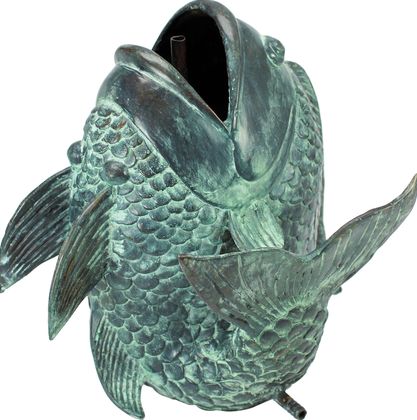 Designed for drinking water and ceremonial functions, the very first fountains were simple carved stone basins. Rock basins are theorized to have been 1st used around 2000 BC. The force of gravity was the power source that controlled the initial water fountains. Drinking water was supplied by public fountains, long before fountains became decorative public monuments, as beautiful as they are practical. Animals, Gods, and spectral figures dominated the very early decorative Roman fountains, starting to appear in about 6 BC. The Romans had an intricate system of aqueducts that supplied the water for the countless fountains that were placed throughout the community.