
The Many Good Reasons to Include a Water Feature
The Many Good Reasons to Include a Water Feature You can enhance your outdoor space by including a wall fountain or an outdoor garden water feature to your yard or gardening project.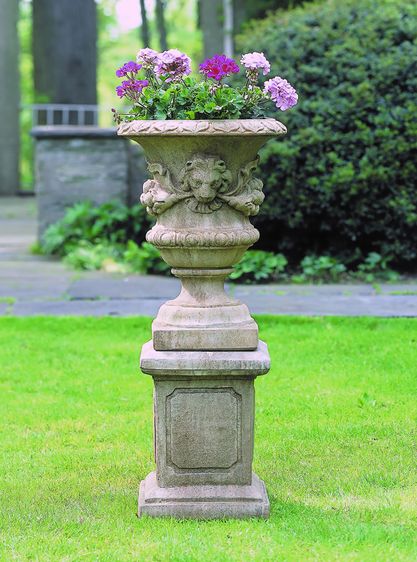 Contemporary designers and fountain builders alike use historic fountains and water features to shape their creations. Therefore, in order to connect your home to earlier times, add one these in your decor. The advantage of having a garden fountain goes beyond its beauty as it also attracts birds and other wildlife, in addition to harmonizing the ecosystem with the water and moisture it emits into the atmosphere. Flying, annoying insects, for instance, are frightened off by the birds congregating near the fountain or birdbath.
 Spouting or cascading fountains are not the best option for a small yard since they require a great deal of space. Either a stand-alone fountain with an even back and an attached basin set against a fence or a wall, or a wall-mounted style which is self-contained and hangs on a wall, are some of the options from which you can choose. Adding a fountain to an existent wall requires that you include a fountain mask as well as a basin at the base to gather the water. The plumbing and masonry work necessary for this kind of job requires training, so it is best to employ a skilled person rather than go at it yourself.
Classic Greece: The Origins of Garden Statue Design
Classic Greece: The Origins of Garden Statue Design Traditionally, the vast majority of sculptors were compensated by the temples to decorate the involved pillars and archways with renderings of the gods, but as the era came to a close it became more common for sculptors to portray regular people as well simply because many Greeks had begun to think of their religion as superstitious rather than sacred. Portraiture, which would be recognized by the Romans upon their annexation of Greek civilization became traditional as well, and thriving family members would sometimes commission a rendering of their forebears to be placed in enormous familial tombs. During the the many years of The Greek Classical period, a time of visual progress, the use of sculpture and many other art forms transformed, so it is inaccurate to say that the arts delivered merely one function. Whether to fulfill a visual desire or to commemorate the figures of religion, Greek sculpture was an innovative method in the ancient world, which may be what attracts our attention today.
What Are Garden Water fountains Made From?
What Are Garden Water fountains Made From? While today’s garden fountains are made in a variety of materials, most are made from metal. Metallic ones offer clean lines and unique sculptural accents and can accommodate nearly any decorative style and budget. The interior design of your house should determine the look and feel of your yard and garden as well.One of the most common metals for sculptural garden fountains these days is copper. Copper is used in cascade and tabletop water fountains as well as many other styles, making it versatile enough for inside and outside fountains. Another advantage of copper fountains is they are versatile and come in a wide range of styles.
If you are drawn to more traditional -looking water fountains, brass is probably for you. You will see a lot of brass fountains, as their intriguing artwork makes them common even if they are on the more traditional side.
Of all the metals, stainless steel is viewed as the most modern -looking. Adding a modern-looking steel design will immediately add value to your garden and elevate the overall ambiance. As with most fountains, they are available in many sizes.
Fiberglass fountains are widespread because they look similar to metal but are more affordable and much less difficult to move around. Caring for a fiberglass water fountain is quite easy, another benefit that consumers love.